Completed Event: Baseball versus Yaquis de Obregón on September 26, 2026 ,

Baseball
vs Yaquis de Obregón
Baseball
vs Yaquis de Obregón

Baseball
1 p.m.
vs Chandler-Gilbert CC

Baseball
1 p.m.
vs South Mountain CC

Baseball
3 p.m.
vs Central Arizona College

Baseball
3 p.m.
vs Cochise College

Baseball
at Hawai'i
Baseball
at Hawai'i
Baseball
at Hawai'i

Baseball
vs San José State
Baseball
vs San José State
8/29/2026 2:54:00 PM | Baseball
Baseball head coach talks about 1st summer building GCU program
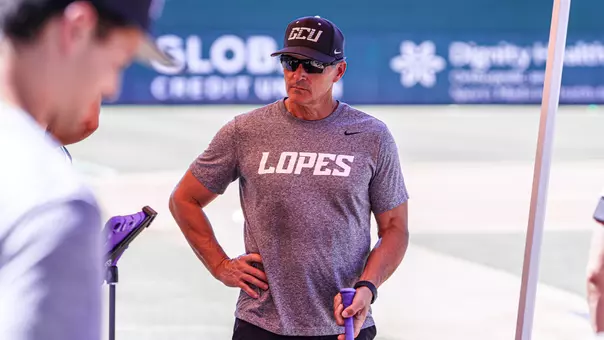
Grand Canyon baseball head coach Steve Bieser sat down with host Michael Potter for an extended conversation about his transition to GCU, building his first roster, his coaching philosophy, faith, family, player development and his vision for the Lopes program.
The transcript below is from the above video interview on July 30 and has been lightly edited for readability.
Michael Potter: Fifty-eight days ago was the announcement, does it feel like 58 days?
Steve Bieser: No, I think it's went really quick. We've had so much to take care of and get everything settled and ready for the season. Time's flown.
Potter: You talked a lot in the (introductory press conference) about your family and how important they've been to your success, especially your wife. How has that been for for her?
Bieser: It takes a special woman to do the baseball life. That's something that we've been involved in since the college days. We grew up together, so she knew baseball was very important to me. Then she's become a baseball wife. Through the minor leagues and all the moves we've made there to the big leagues and then into the coaching realm.
When I finished (playing), we really thought, OK, we're both going to get teaching jobs. We're going to settle down in Sainte Genevieve, Missouri, which is where all our family is from. Got the itch a little bit after nine years of high school teaching and coaching to coach at a little higher level. That happened and got the opportunity at Southeast Missouri State.
It was a leap of faith at that time to do that. At that time there was not a whole lot of money, and there still isn't a whole lot of money, for assistant coaches coming into the college ranks. So we took that leap of faith. God has been great and blessed us in many ways and gave us an opportunity to be a head coach and been at some really special places.
Potter: You talked about Mark Hogan recruiting you. It sounded like you really enjoyed the high school life teaching and coaching. How hard was it to leave that so many years ago and get started on this journey?
Bieser: It was really tough. I was at St. John Vianney High School, and we had a lot of success. It was a private, all-boys school, which eliminated some of that competition with girls being around. So it was easy to teach, easy to coach. We had a lot of success there.
Anytime that you're at a place with that faith background and having a real sense of true life, what it means beyond baseball, it's a good place. Really enjoyed our time there. You get things and you decide, let's try something else.
Potter: 58 days ago, the announcement happens. You do all the press conferences, meet everybody. What have you been working on those 58 days?
Bieser: Yeah, I think everything was new. We really had to focus on the players that were here. We actually only retained about 14 guys. Not by choice, those guys had a lot of opportunity and places to go.
That really made us go to work on finding a full roster. We had at least 26 guys in our mind that we had to go out and find. We've been very blessed. You get a place like Grand Canyon to recruit to, it's easier than I thought it was going to be.
We were able to secure this group, we wrapped up (mid July), for the most part, from our recruiting efforts. I thought we would go middle August before we'd be able to get that roster. But things have worked out pretty well on our recruiting front. We were able to get a really good group of guys. Just excited to get to know them and get them here on campus soon.
Potter: It struck me that it seemed like once you got the guys here on campus, got to share your vision and they got to see what GCU was all about, they made a decision pretty quickly. What was it about Grand Canyon University that attracted kids?
Bieser: I think in general, the first thing you're going to do is you're going to pick up the phone and you're going to talk to the recruits. You're going to share your vision of the program, and I'm going to talk about the faith aspect.
We get a lot of guys that really turn on pretty quickly when they hear the faith aspect and it's more than just being a baseball player as you come into this program. We're really trying to coach the whole player and the whole athlete and give them a great experience all throughout, through the academics, through the faith side, through the baseball.
When you've got guys that light up, you know that you've got a good shot. Now it's just getting them on campus, meeting them face to face. Really the only ones that we struggled on were the guys that were like, 'Hey, we're too busy to come on campus.' We just missed out on a few of those guys that we really wanted.
But when we got them here and we were able to sit down and talk to them, our coaching staff did an outstanding job with showing them all the strengths of this school. I think that won out.
Potter: You can look at a kid and see that's a good athlete, that's a good player. But how do you judge the heart and the and the character?
Bieser: That's a tough one, it really is. The reality is that's probably the most important thing when you're building a program. You can go out to any event and immediately, within the first couple innings, know who the best players are on the field. You can see how they move. I really like that player on the field.
Then I think the most important thing is getting to know that person. You have to pass on some guys that this place isn't for everybody. Just like any school, it's not for everybody.
But I think in the recruiting process, you really need to be honest with players you're bringing in, sharing your vision of the program, sharing who you are, what the program stands for, and then giving them all that information so they can make the best decisions for themselves. When you're honest in those recruiting efforts, I think you're getting the right person that eventually says yes.
Potter: What is your style? What are you looking for when you're recruiting guys? How are you putting the team together?
Bieser: It gets termed everywhere I've been "Bieser Ball." What it is, is it's just a fast-paced game. We want to push the other team into being uncomfortable.
If we play fast, if our pitchers attack the strike zone really quick, dominating, getting ahead in counts. If we're on the bases and we're looking to move to the next base within the first couple pitches. Whether we're going to steal that base or whether we're going to drop down a drag bunt because we got a guy that can really handle the bat or hit and run. We're always trying to move, always trying to make the opponent very uncomfortable.
We have to recruit that type of player. We have to go out and look for a guy, and you talk about the five tools, the one thing that never goes away is speed. If they've got speed now, you've got to teach them how to use speed. That's what puts a lot of pressure on opponents.
A lot of people lose sight of the value of what that does to the pitcher on the mound when he has to really focus on the baserunner. Now, he loses a little focus on delivering the pitch, so it makes it easier for the hitters. We're just trying to create chaos out on the field and any way that we can do that, that's how we're going to go about it.
Potter: How do analytics fit into that equation of that style of baseball?
Bieser: Analytics really helps the coach in my opinion. If you can use numbers and you can use measurement to talk to players because the old way was, 'Hey, my eyes tell me that you don't do this very well.' Well, that's me making a judgment on you.
The new way and the way that I like to frame it is, 'Hey, we know what Mike Trout, what his numbers are. We know all those numbers from Major League Baseball, and you want to be a professional baseball player. So let's take a look at this.'
On a mound, velocity is too low. How do we increase that? The velocity rather than just say you don't throw hard enough. Let's go to work and let's try to increase that. Or your bat speed. We know average bat speed in the big leagues is X. Let's go attack this and let's really get after it and let's work on this together rather than feeling like it's a me against you type thing.
We're going to use every data point we can to help improve our players. It's a process. When you first get into it, you want to do everything. I got caught up into that. We had every little gadget and every little thing and we were the master of none of them but the jack of all of them.
So being able to spend some years and digging and finding out what's important on how we want to play and being able to take the important things from the analytics side and using the technology and putting it into the system really has helped us.
Potter: How important was building your staff to get to where you want to be? How difficult was it to recruit those guys on the staff and how important was that?
Bieser: It's just like players, if you can retain players, especially now, that you want to keep in your program, then you're going to hit the ground running. You're going to be in a little better situation. Same thing with my staff.
I wanted to keep as many of the guys that wanted to come this far out west. For most of our guys they've been in the southeast and done those things. But if I could retain guys that knew our system, retain guys that knew how I wanted things done, then we're going to have a head start.
I was very fortunate to bring Coach Packanik with me. He's been with me since the Missouri days and brought him in as a volunteer early on. So he's seen many years of the development of things that we want to do. Having him on board, he's our associate head coach. He knows what we want done. He's very good at leading that.
Building that staff out was very important. People always tab me, he always goes after pro guys. What happens is everybody comes after my guys in professional baseball as well. So my staffs have, a lot of them, it's been a revolving door because we do a lot on the analytics side, we do a lot on the technology side. So they're very well trained to go into professional baseball and do a good job of professional baseball as well. So it's really a trade off.
We were able to get two guys that were in professional baseball, guys that I knew before or knew their parents and able to bring them in after having some really good experience from professional baseball. They understood what I wanted to do from a program here at Grand Canyon and they fit us very well in Coach Ricci and Coach Fitta.
They both understand what we're trying to do on an offensive side and one on pitching side. The goal is always to retain them. Can can we keep them here? I hope it's going to be really hard because that means we're having a lot of success. People are going to recruit the coaches out of programs that have a lot of success.
Potter: Baseball still is a development game. We see kids come in and they don't really do much their freshman year, and they're superstars by their senior year. Do you recruit a kid that gets that?
Bieser: Nobody's patient these days, right? You want immediate satisfaction, you want immediate playing time. I think our system in college baseball now, it's kind of even made that worse. If you're at GCU and you don't play in Year 1, you think it's going to be better to transfer out and you're going to play somewhere else.
That's where I feel like we do a really good job of retaining players. When you pour into your players every single day, you coach them hard, you give them a lot of good nuggets that they can improve their game on, they know they're developing and then they start to understand it takes some time.
I got 30 at bats my freshman year, but next year I might get 100 or I might play every day and get 200. Being able to sell that development side and really come alongside them.
Their goal is to get to professional baseball. If we can come alongside them and show them their improvement and development and keep them developing, and we know where we've got to get them to by their junior year draft eligible, stick right here because the grass isn't always greener someplace else.
You might go right back into the same situation at a program that – a lot of programs focus on recruiting. Get a guy in, if he works great, we're going to keep him. If he doesn't, let's go get the next guy. I want our program to be one that's very stable and can keep players here, mainly because you love on them a lot and you give them a lot of good things to look forward to every single day.
Potter: You hit on faith, family and development in your press conference. It feels like baseball melds with that discipleship really well. We need you guys to stay here for four years so we can disciple you and make you a better ballplayer.
Bieser: We really do. That's how I wanted to build a program. I wanted to build a program that players wanted to be in for three, four years. If they don't get drafted, it's four years, and now it's five years. How do we keep a player for five years?
When you can sell the faith and family and development, I think that that goes a long ways with players these days because they have seen a lot. They have so much information sitting in that little phone of theirs, they can find any piece of information they want. Some of it's good, some of it's bad.
When you can create a family atmosphere, people will stick around. That's our whole goal. All fall, I'm going to be concerned about our play on the field, but I'm going to be more concerned about what does it look like in our locker room.
Are these guys gelling? Are they coming together as a team, as one unit and want to play together? Or are they going to be individuals? It's going to be very intentional to create that team environment, supporting one another, that brotherhood that we talk about in the locker room, that's going to be the most important thing in our first fall that we're going to have in this program.
Potter: You talked about the Lopes E.D.G.E. You learned that from Mike Matheny and kind of developed it into your own. Talking about excellence, discipleship, grit and earned. Are those all equally important? Is there one that's above the other?
Bieser: I would say excellence is what I started with. Matheny and I learned it from LaRussa. What coaches do is you're really good at stealing something from somebody and making it your own. In my acronym, it's a little bit different than what theirs was. I put equal weight on all of them.
We will spend an entire week just talking through those. Everything from taking excellence from a faith standpoint, getting into the Word with what does excellence mean there to what does it mean on the field and what does it mean in your life.
If you just start there. I always say comparison's the thief of all joy. If we could just all get in and be ourselves and understand it's the best version of me. It's the best version of me in the classroom when I go to the classroom. It's the best version of me when I hit the weight room and when I hit the field. When I get away, how am I taking care of myself?
If we could just get to that point and not worry about our teammates being competition, because that's what I don't want is me and the other guy that's competing for the shortstop, we're in competition, we're head to head every day. How do we make each other better? Let God take care of the rest of it. We'll see who gets on the field and there's a plan for every one of us.
If we can work through all of those, the discipleship is extremely important, the grit's extremely important. The last thing is, anything that you've worked extremely hard for, you're going to take care of, you're going to love that a little bit more than just a gift that somebody gives you that you haven't worked for.
I think that's a huge part. I tell everybody that every recruit that comes in, there's not a team in the country that works harder than our teams. If you're good with that and you like to work and it's going to be smart work, but it's going to be some good physical work. So understand that we work hard and we want you to be part of this. But if that's not your DNA, then this is probably not the right program.
Potter: Everybody gets the opportunity, but you got to do something with it to earn the outcome.
Bieser: No doubt. We know it all comes down to, when we get into season, outcome. But we're going to sell the process like nobody else. The fall's short. We got to really focus on the process. We're going to introduce our practice plans and our goals.
How can we make that a process every single day? Because I think as coaches, you know that if you can stick to a consistent process. Baseball training is really boring. It's routine. If you want to be good, you got to be really good at the routine stuff and the fundamentals and it gets boring. Who can outlast that and just really stick to the quality of just being excellent.
Potter: What do you want to just say to the fans about what kind of program you're going to be building and why their support is so important?
Bieser: Biggest thing I would say is, what an opportunity that we have here. That's what really attracted me to GCU. You want to have great leadership. Starting with President Mueller to Jamie. When I met the two of them, I knew this place was special.
And now having a chance to take this program to be the best program in the country is something that I really embrace. I don't say that very often. People usually ask me at the beginning of the year, how are you guys going to be? I usually downplay it and say, I don't know.
Last year was the first time I would say I knew we were going to be good, but I still I'm going to downplay that. But I don't want to downplay the fact and hide from us wanting to be the best team in the country.
And it's going to take a lot of work. We're going to need a lot of help. We're going to need fan engagement. We're going to need to pack this place and create a great environment. A lot of that's on us to make this a very inviting place for people to come and watch games.
But we're going to have to invest. We've got a wonderful, beautiful facility here. The bones of this facility is outstanding. But can we invest and have the best facility in the country as well? I believe that's a possibility as well. The space and the setting here is phenomenal.
It's going to take a village to do the things that we want to do. I understand that and I embrace the challenge but also know that we've got so much support here, a lot of momentum going right now. We need the momentum from the outside to really put us over the top.