The 3-point line will change next season in Division I men's basketball, but the Lopes do not feel like much else will change because of it.
The NCAA Playing Rules Oversight Panel voted Wednesday to move the 3-point arc to the international competition distance of 22 feet, 1 3/4 inches, which is 1 feet and 4 3/4 inches farther than where the line has been since 2008. The new distance was used as an experiment during the past two National Invitation Tournaments.
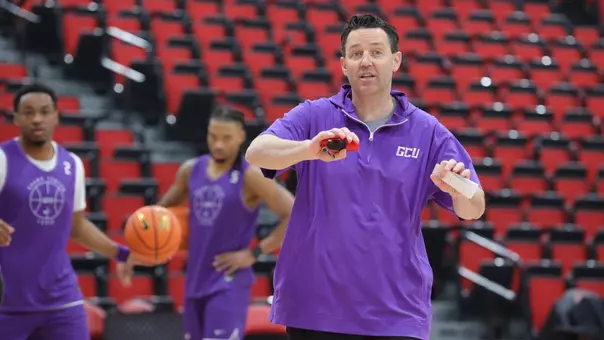
"I think guys will shoot when they shoot anyway," Grand Canyon head coach
Dan Majerle said. "It might spread the floor a little bit more but I don't think it's a big deal at all."
Like Majerle, many head coaches polled by NCAA.com were unsure about whether the move would impact play much or at all. Some believe it is a response to the increase of 3-point shooting and that it readies players for the pros better. Others foresee some increase in offensive movement because of better spacing or an increased use of double-teams on top players or post-ups because the longer shot presumably would be a lower-percentage shot.
"For most 3-point shooters, we'll shoot the 3 wherever the line is," GCU junior guard
Isiah Brown said. "I don't think it'll affect how many 3s are shot. It'll probably make it a little easier for guys to transition from college to the pros, and the spacing will be a little bit better, too, and make it a little more like the pro game."
The Lopes already have increased their use of 3-pointers in recent seasons. They averaged 18.8 3-point attempts per game in Majerle's first four seasons and then took 22.9 3-point shots per game over the past two seasons. NIT teams took more 3s (23.1 per game) than the regular season (22.8) last season but made fewer (33 percent vs. 35 percent).
"It'll probably help spacing-wise," GCU junior guard
Damari Milstead said. "College players' goal is to be pro anyway, so you're just preparing to be a pro."
Junior center
Alessandro Lever, who was second on the team behind
Oscar Frayer in attempted 3s last season, will be the least affected by the change. Growing up in Italy, Lever played with an international line for most of his life, continues to play with it for his national team in offseason competition and takes long 3s at GCU anyway.
"It's going to be more normal for me than shooting closer to the basket," Lever said. "I have been playing my whole life with the international FIBA, one so I'm more used to it. I'm more comfortable with the longer one."
The NCAA panel also approved rules to:
- reset the shot clock to 20 sseconds after an offensive rebound;
- allow coaches to call live-ball timeouts in the final two minutes of the second half and overtime periods;
- assess technical fouls for derogatory language about an opponent's race, religion, sexual orientation or disability.
Follow Paul Coro on Twitter: @paulcoro.